
Choosing between All-in-One (AIO) and All-in-Two (AIT) solar street lights usually comes down to two things: how much sun you get and how much maintenance you want to do.
Here is a breakdown to help you decide which setup fits their project.While both
systems aim to provide off-grid lighting, their designs offer very different advantages.
1. All-in-One (Integrated) Solar Lights
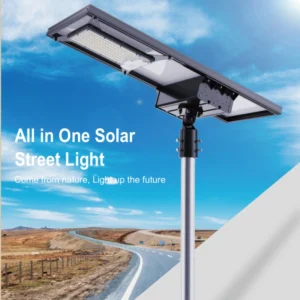
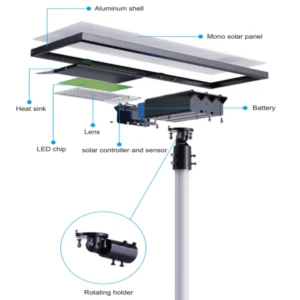
In this design, the solar panel, LED lamp, LiFePO4 battery, and controller are all housed in a single casing.
- The Pros:
- Dead Simple Install:Since there’s no external wiring, you just bolt it to the pole. It’s a “plug-and-play” solution.
- Compact & Sleek:Better for urban areas or parks where aesthetics matter.
- Cost-Effective Shipping:Smaller packaging means lower freight costs.

All in one solar street light The Cons:
- Fixed Angles:Since the panel is attached to the light, you can’t tilt the panel toward the sun without moving the light beam.
- Heat Issues:Components are packed tightly; in very hot climates, the battery can overheat, shortening its lifespan.
2. All-in-Two (Split-Type) Solar Lights
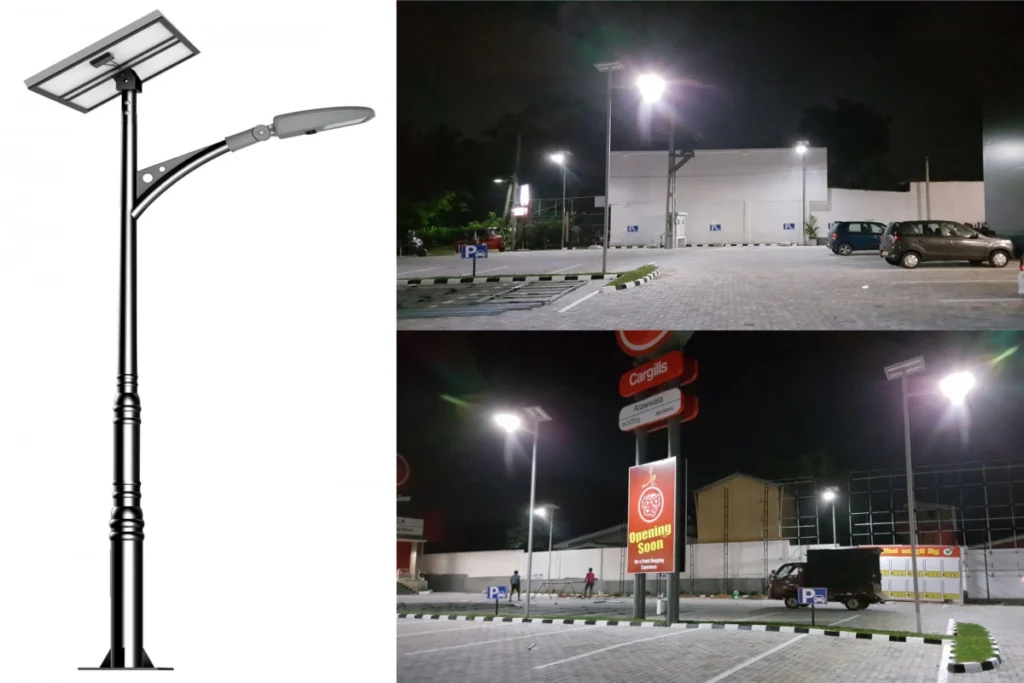
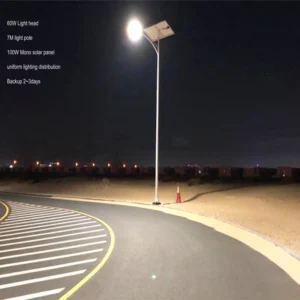
These systems separate the solar panel from the rest of the unit (the lamp, battery, and controller stay integrated).
- The Pros:
- Maximum Efficiency:You can rotate and tilt the solar panel independently to catch the most sunlight throughout the day.
- Bigger Panels:Because the panel isn’t limited by the size of the lamp body, you can use a much larger panel for higher-wattage lights.
- Better Cooling:Better airflow between components usually leads to a longer-lasting battery.
- The Cons:
- Complex Install:Requires some wiring and mounting of two separate parts.
- Higher Cost:Usually more expensive upfront due to the mounting hardware and extra labor.
The Verdict: Which should you choose?
- Choose All-in-One if:You are lighting a residential street, a parking lot, or a backyard where installation speed is the priority and the light requirements are moderate.
- Choose All-in-Two if:You are in a region with low sunlight, or if you need high-intensity lighting (like a highway or industrial zone) where you need a massive solar panel to keep the battery charged.
Here is the technical comparison and ROI guide.
All-in-One vs. All-in-Two: Quick Comparison
| Feature | All-in-One (AIO) | All-in-Two (AIT) | |
| Installation | Extremely easy (10 mins) | Moderate (requires wiring) | |
| Solar Panel | Fixed angle (limited) | Adjustable (max efficiency) | |
| Battery Life | Average (3–5 years) | Superior (5–8 years) | |
| Max Power | Typically up to 120W | High-power (200W+) | |
| Maintenance | Low (hard to swap parts) | Easy (parts are accessible) | |
| Best For | Parks, pathways, residential | Highways, industrial, cloudy areas |
Calculating Your Return on Investment (ROI)
The biggest hurdle for users is the initial price tag. While solar lights cost more upfront than traditional grid-powered lights, they pay for themselves by eliminating monthly bills and “trenching” costs (digging for wires).
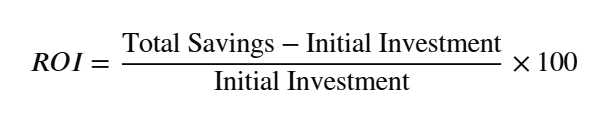
The ROI Formula
To find your ROI percentage, use this formula:
Why Solar Wins the Long Game
- Zero Electricity Bills:A single traditional light costs about $20/month in electricity. Over 5 years, that is $1,200 saved per fixture.
- No Trenching:Installing traditional lights requires expensive underground wiring. Solar can be 30–40% cheaper to install because you just plant the pole.
- Lower Maintenance:Solar LED lights last 50,000+ hours, whereas traditional bulbs often need replacing every year.
Typical Payback Period: Most solar street light projects reach the “break-even” point in 4 to 7 years. After that, every night of light is essentially free.
If your project is in a hot climate, suggest the All-in-Two. Separating the battery from the hot solar panel helps it stay cool, preventing the battery from “cooking” and potentially doubling its lifespan.